
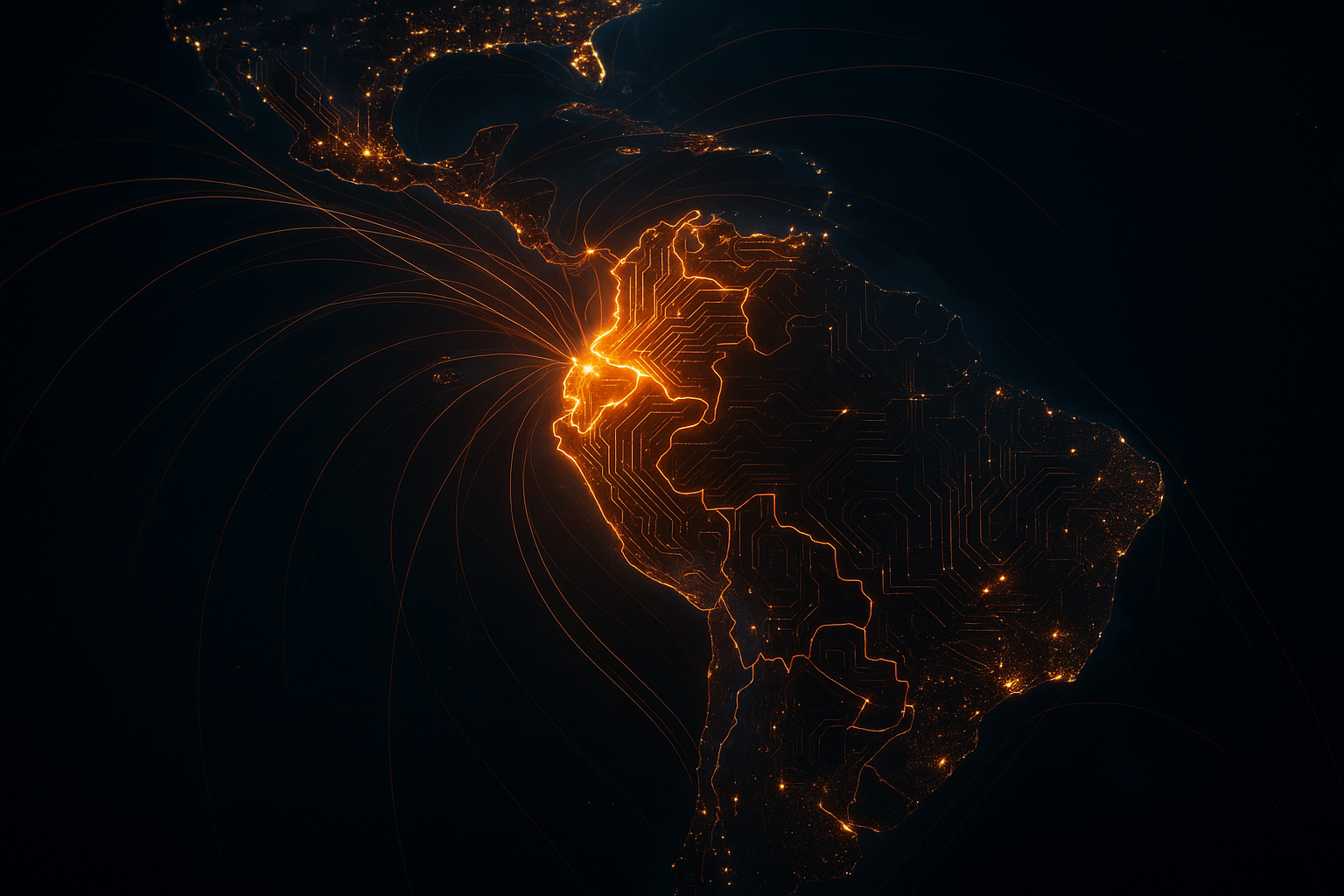
For two decades, China has been the backbone of electronics manufacturing. Scale, supplier density, infrastructure, and engineering depth made it difficult to match. But by 2026, tariffs, IP concerns, supply-chain disruptions, and the need for faster coordination are pushing companies to diversify where products are designed, assembled, and supported.
Latin America is no longer just a backup option. Mexico remains the region’s manufacturing anchor, while Colombia, Costa Rica, Brazil, Panama, and the Dominican Republic offer different combinations of engineering talent, regulated manufacturing, market access, logistics, and free-zone infrastructure. The right hub depends on the product—not on a single regional ranking.
Last reviewed: July 18, 2026.
Colombia: The Rising Hub
Colombia remains one of the most interesting nearshoring locations for electronics teams that value real-time collaboration with North America.
- U.S.-aligned time zones make design reviews, supplier calls, and engineering support easier to coordinate.
- Bogotá, Medellín, Cali, and other cities provide engineering, software, industrial-design, and technical talent.
- Free-trade zones can support industrial, service, and commercial operations under specialized customs and tax rules.
In July 2026, Colombia’s Ministry of Commerce reported 112 free-trade zones in operation, with more than COP 57 trillion in investment and over 198,000 direct, indirect, and related jobs. Those are economy-wide figures—not electronics-only numbers—but they show that the country has a substantial platform for export-oriented operations.
Colombia’s strongest near-term role is not to copy China’s component ecosystem. It is to combine engineering, prototyping, product support, selected assembly, and regional supplier development. Companies still need to verify component availability, customs lead times, test capabilities, certification support, and the depth of local contract manufacturing for their exact product.
More here: Why Colombia is catching attention in electronics manufacturing.
Costa Rica: Strong but Specialized
Costa Rica is the region’s clearest specialist in medical devices and high-value precision manufacturing.
- Medical devices were Costa Rica’s largest export category in 2025.
- Long experience with regulated products supports quality systems, cleanroom operations, validation, and supplier development.
- The country attracts manufacturers that prioritize intellectual property, technical talent, and predictable export operations.
According to Costa Rica’s Ministry of Foreign Trade, medical-device exports exceeded US$10.8 billion in 2025, up 25% from 2024 and representing 31% of the country’s combined goods-and-services exports. That scale makes Costa Rica highly credible for medtech, precision components, and regulated assemblies.
The trade-off is specialization. Costs and labor availability can be less attractive for low-margin, high-volume consumer electronics, while the local ecosystem is strongest where quality, validation, and process control matter more than the lowest possible unit cost.
Brazil: Big Market, Heavy Lifting
Brazil combines a very large domestic market with an established electronics base, research institutions, and renewed semiconductor ambitions.
- The federal Brasil Semicon program supports production, semiconductor design, specialized software, research, and innovation.
- Domestic demand can justify local production even when exporting from Brazil is less straightforward.
- The EU–Mercosur interim trade agreement has created a new trade framework for Brazil and the other Mercosur members.
Brazil is not the easiest first nearshoring move. Tax administration, import procedures, local-content requirements, logistics, and state-level differences demand experienced local advice. U.S.–Brazil trade-policy friction also increased in 2026, so companies should model duties and regulatory exposure rather than assuming stable access.
For businesses targeting Brazil’s domestic customers, automotive ecosystem, industrial base, or semiconductor programs, the upside can justify the complexity. For a simple U.S.-focused export assembly operation, other hubs may be easier.
Other Players to Watch
- Panama → Best viewed first as a logistics, distribution, repair, and regional-service hub rather than a deep electronics-manufacturing cluster.
- Dominican Republic → Free-zone experience and proximity to the U.S. make it relevant for selected assemblies, cables, medical products, and labor-intensive manufacturing.
- Chile → Strong institutions, mining technology, renewable-energy projects, and copper-related supply chains create specialized opportunities rather than a broad EMS ecosystem.
- Argentina → Engineering talent and lithium-related opportunities are attractive, but currency, import, and policy risks require careful planning.
Policy & Trade Shifts Driving Nearshoring in 2026
Policy is a major reason companies must evaluate nearshoring country by country.
- USMCA remains in force, but its 2026 review created uncertainty. On July 1, 2026, the United States did not agree to renew the agreement in its current form. The agreement remains active while negotiations continue, with rules of origin and economic security among the issues under discussion.
- EU–Mercosur moved from pending to active. The interim trade agreement between the EU and Argentina, Brazil, Paraguay, and Uruguay has applied provisionally since May 1, 2026. Companies must still check product-specific tariff schedules and origin rules.
- Free-zone and incentive programs remain central. They can improve customs and tax treatment, but eligibility, export commitments, local substance, and reporting requirements vary by country and project.
The practical lesson is that “nearshore” does not automatically mean tariff-free or compliant. Before selecting a site, map the bill of materials, country of origin, target markets, certification requirements, logistics lanes, and after-sales needs.
Quick Comparison
| Hub | Best fit in 2026 | Main advantage | Watch-out |
|---|---|---|---|
| Mexico | Scaled North American manufacturing | Supplier depth and proximity to the U.S. | USMCA review and rules-of-origin uncertainty |
| Colombia | Engineering, NPI support, selected assembly | Time-zone alignment and free-zone platform | Component ecosystem and logistics depth |
| Costa Rica | Medtech and precision manufacturing | Regulated-industry experience | Cost and limited fit for commodity electronics |
| Brazil | Domestic-market products and semiconductor programs | Market scale and technical ecosystem | Tax, customs, and regulatory complexity |
| Panama / Dominican Republic | Logistics, service, and selected assemblies | Trade-zone and geographic advantages | Smaller electronics supplier base |
Looking Ahead: 2027 and Beyond
- Colombia → The opportunity is moving from general nearshoring promotion toward deeper engineering, prototyping, supplier qualification, and export-oriented production.
- Costa Rica → Life sciences will continue moving toward higher-value processes, automation, R&D, and more specialized suppliers.
- Brazil → Brasil Semicon and the EU–Mercosur framework could support new investment, but execution and regulatory complexity remain decisive.
- Mexico → It remains the anchor, but sourcing and investment decisions must account for the unresolved USMCA review.
The future is not about replacing China, Taiwan, or Mexico with one new country. It is about building a portfolio of hubs: design and coordination where teams work efficiently, component sourcing where the ecosystem is strongest, and manufacturing where volume, compliance, logistics, and market access make sense.
Titoma’s Role
At Titoma, we have expanded our design operations in Colombia alongside our Taiwan hub. This dual setup enables faster iteration and tighter coordination while retaining access to Taiwan’s component-sourcing and electronics-manufacturing ecosystem.
Our engineers in Colombia can collaborate in real time with U.S. clients, while the Taiwan team supports component selection, supplier coordination, DFM, prototyping, and production transfer. This hybrid model—design where communication is efficient and manufacture where the supply chain is strongest—is a practical way to use Latin America without pretending every capability must exist in one country.
Further Reading
- Why Colombia Catches Attention in Electronics
- Electronics NOT Made in China: 5 Options to Avoid Tariffs
- Best Country for Electronics Manufacturing in 2026
- Colombia Ministry of Commerce – Free-Trade Zones in 2026
- Costa Rica Ministry of Foreign Trade – 2025 Export Results
- USTR – 2026 USMCA Joint Review Statement
- European Commission – EU–Mercosur Agreement
Conclusion
Latin America nearshoring in 2026 is a portfolio decision, not a race to name one winner. Mexico offers the deepest manufacturing base, Colombia is compelling for engineering and coordinated product development, Costa Rica leads in medtech and precision work, and Brazil combines market scale with growing semiconductor ambitions.
Before moving production, compare the complete operating model: engineering access, BOM origin, suppliers, test coverage, certifications, logistics, duties, working capital, service requirements, and the cost of managing more than one site. Nearshoring works best when it reduces total business risk—not merely the distance between a factory and the customer.