
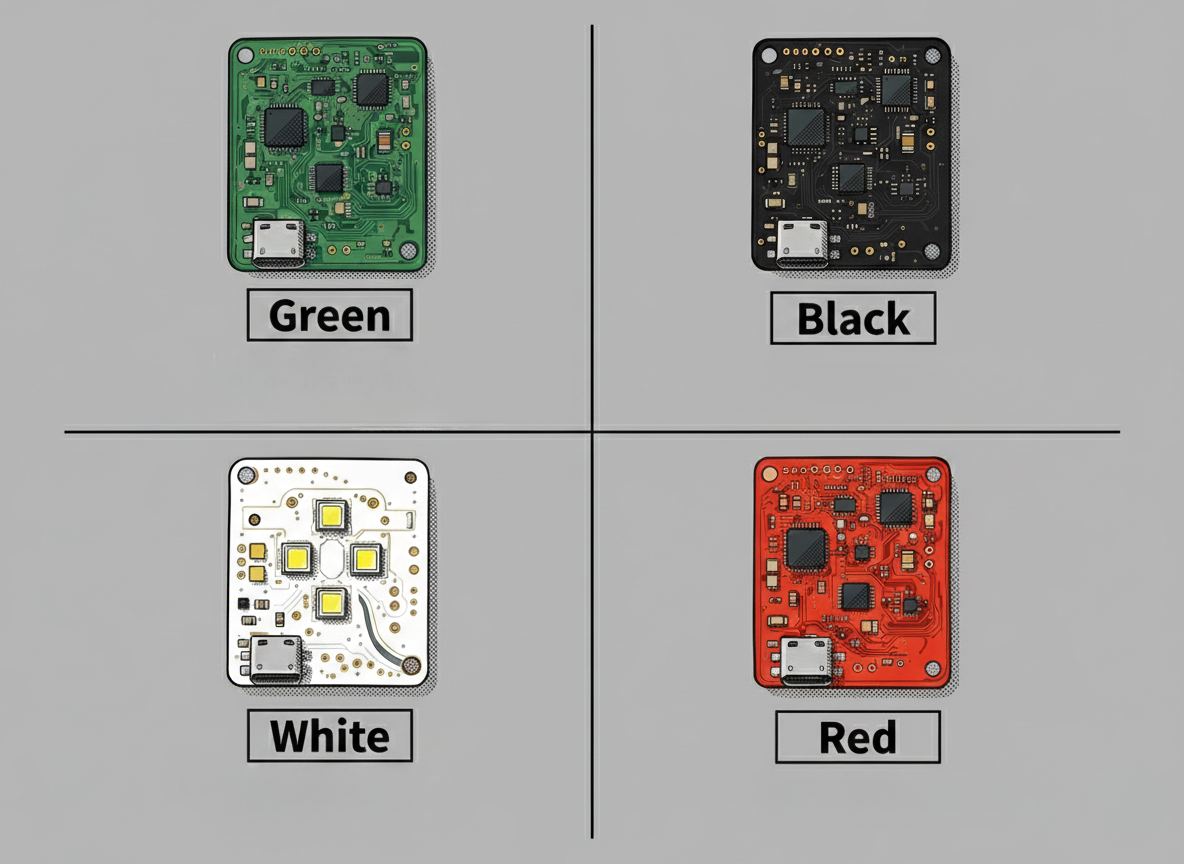
PCB Solder Mask Selection: Why Color is a Critical Engineering Decision
In hardware development, it’s easy to dismiss the color of a Printed Circuit Board (PCB) as a purely aesthetic choice—a way to make a product look “premium” or align with brand guidelines.
However, at Titoma, where we focus on Design for Manufacturing (DFM) and helping B2B companies scale production in Asia, we view the solder mask as a functional component. Choosing the right color isn’t just about how the board looks; it’s about optimizing for inspection speed, thermal performance, and long-term reliability.
When you move from a prototype to mass production, your choice of solder mask can directly impact your yield rates. Here is the engineering breakdown of why PCB color matters.
1. The “Standard Green” Advantage: Precision & Throughput
There is a technical reason why roughly 90% of the world’s PCBs are green. It isn’t just tradition; it’s physics.
- Human Eye Sensitivity: The human eye is most sensitive to green light, providing the highest contrast between the substrate, copper traces, and silkscreen.
- Inspection Efficiency: For manual Quality Assurance (QA) and Automated Optical Inspection (AOI), green offers the clearest “read” of the board’s topography.
- Process Maturity: According to industry-leading PCB DFM guidelines from Sierra Circuits, green masks allow for a finer 4 mil web width compared to 5 mil for other colors, allowing for higher-density designs without risking shorts.
2. Matte Black: The “Premium” Challenge
Black solder masks have become the go-to for high-end consumer electronics. While it looks sleek, it presents significant manufacturing hurdles that can increase your manufacturing costs in China.
- The Visibility Gap: Traces are nearly invisible under a black mask, making rework and debugging significantly more difficult for engineers during the NPI phase.
- Shadowing Issues: Black masks often mask solder bridges because shadows can hide defects from AOI machines, leading to higher defect rates if the factory’s lighting isn’t perfectly calibrated.
The Titoma Rule: Save black for final, “frozen” consumer products. Avoid it for early-stage prototypes where you anticipate needing to cut traces or solder jumpers.
3. Bright White: The Lighting Specialist
If you are designing LED arrays or high-intensity lighting fixtures, white is often the only logical choice.
- Reflectivity: White solder masks maximize light reflectivity to maintain brightness and color accuracy.
- The Heat Trade-off: White masks are notorious for discoloring (turning yellowish) when exposed to high temperatures. To ensure long-term durability, it is critical to follow the IPC-SM-840 standards for permanent solder masks.
At Titoma, we recommend a strict quality control process for electronics to monitor reflow temperatures and prevent this discoloration.
4. Red & Blue: Branding and Revision Control
Bright colors serve a functional purpose in professional industrial settings beyond just brand recognition.
- Version Control: We often suggest using different colors to distinguish between hardware revisions or modular components. This prevents “version mix-ups” on the factory floor.
- Visual Hierarchy: Color-coding helps assembly workers identify which board goes into which slot, reducing human error. This is a core tenet of successful electronics product development, where simplicity on the floor leads to higher reliability.
The Titoma Perspective: Design for the Lifecycle
In the competitive B2B market, Time to Market (the “Ti-To-Ma” in our name) is won by designs that flow through the factory without friction. Your solder mask is the “skin” of your product—choose a color that supports your manufacturing yield first and your brand aesthetic second.
FAQs
How does the September 2026 EU CRA deadline impact my project?
What are the benefits of the new 15% tariff cap on Taiwanese goods?
Why is the “IP Custodian” model critical for hardware in 2026?
Ready to move from prototype to mass production? Contact Titoma today to optimize your design for the Asian manufacturing ecosystem.