
Introduction
China is often the first stop for startups and engineers looking to build electronic prototypes. The promise is clear: low cost, fast turnaround, and plenty of supplier options. For anyone racing to validate a concept, that sounds hard to beat. But cheap and fast often comes with strings attached. The hidden risks behind electronics prototyping in China can quietly turn a short sprint into a long, costly detour.
In this article, we look at 5 risks of prototyping in China that engineers and product managers should know about. More importantly, we cover practical ways to reduce these risks and keep projects moving forward without unnecessary headaches.
Risk #1: IP Exposure
Intellectual property is often the most valuable asset for a new hardware venture. NDAs are common, but enforcement can be weak. Many factories treat them as paperwork rather than a serious deterrent.
Copycat activity is not a myth. Even if your prototype is not ready for mass production, the design files and component choices can give would-be competitors a head start. If you send complete schematics and CAD without safeguards, you risk handing over the blueprint of your business to someone who sees imitation as a shortcut to market.
To understand how intellectual property rights are enforced across borders, the World Intellectual Property Organization offers guidance on protecting your IP abroad.
Risk #2: Low-Quality Board Revisions
PCB prototyping in China is cheap and fast, but not always thorough. Many shops compete on price, and quality control can slip. A quick-turn PCB may arrive within days, but with corners cut in validation, you end up chasing phantom bugs caused by poor manufacturing rather than your own design.
Common issues include inconsistent soldering, poor materials, and skipped electrical tests. One batch may work, while the next introduces intermittent failures that waste weeks of debugging. For hardware startups, those lost weeks mean slipping milestones and burned investor confidence.
For a deeper look at how upfront design choices can reduce these risks, see our article on electronics DFM.
Risk #3: Masked Customs Markups
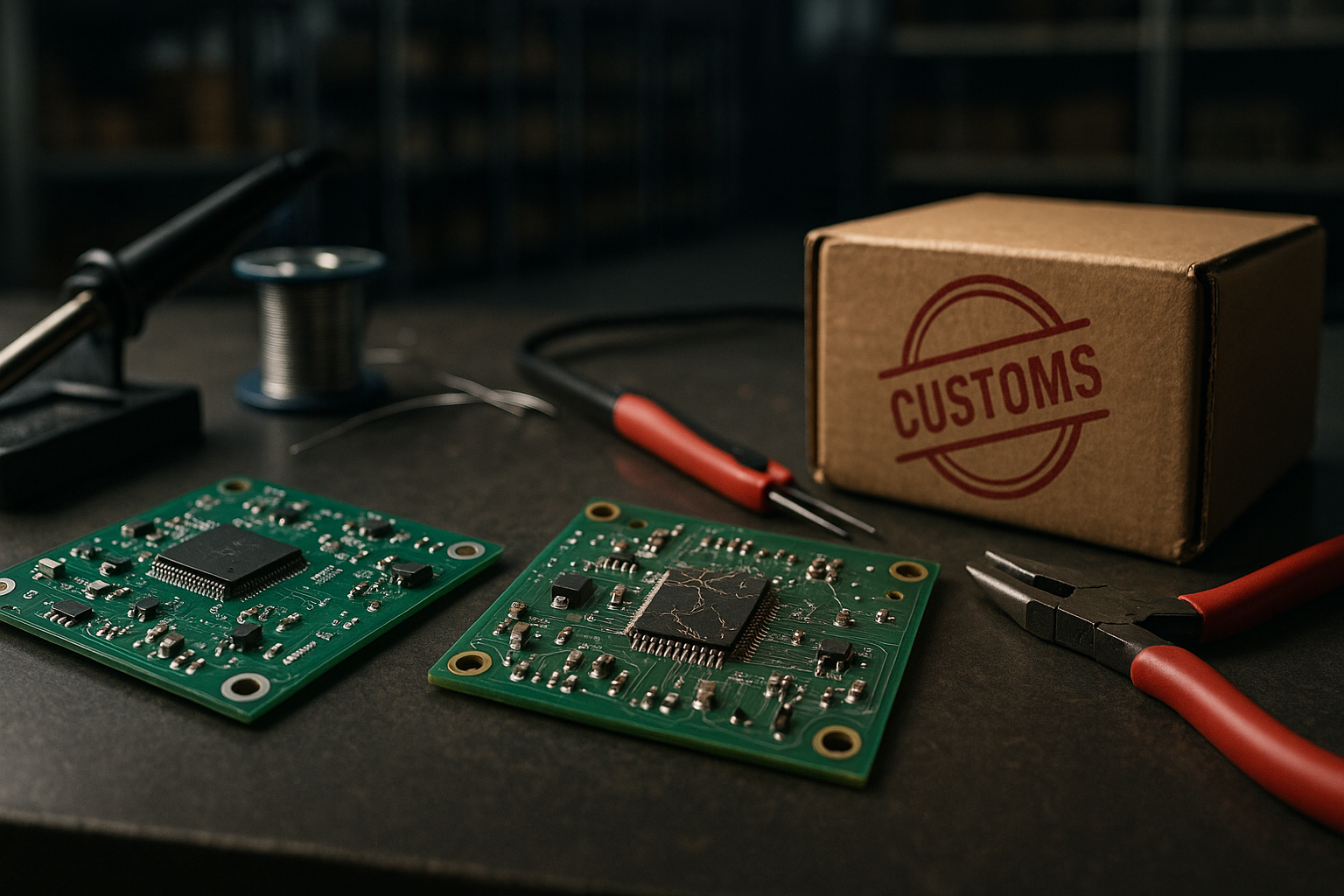
Logistics is another hidden trap. Quoted prices for electronics prototyping in China may look low, but unexpected costs often appear at customs. Components marked under vague categories or “miscellaneous samples” can lead to surprise duties, handling charges, or shipping delays.
These hidden costs do not just affect the budget. A prototype stuck at customs can halt validation cycles and push back customer demos or field testing. Cheap upfront can turn expensive once freight forwarders, brokers, and government fees enter the picture.
Risk #4: Communication Breakdowns
Hardware development depends on clear communication, yet language and time zone barriers add friction. Documentation that seems clear enough in English can be misunderstood in translation. When suppliers work while your team sleeps, urgent questions can go unanswered for a day or more.
Many production-oriented factories also lack the flexibility that iterative prototyping demands. A Let’s Prototype blog post notes that large industrial factories often prioritize compatibility with mass-production methods over innovation. That slows down problem solving and multiplies misunderstandings with every revision.
Risk #5: Tooling Lock-In Traps
The prototype is only the beginning. Once you move to mass production, tooling becomes the anchor. In China, it is common for factories to hold on to molds, fixtures, and test equipment. Even if you paid for the tooling, getting it back can be slow, costly, or not possible at all.
This lock-in limits flexibility. If quality issues emerge or you find a better partner, switching may mean starting from scratch with new tooling. For startups with limited budgets, that can be a make-or-break expense. For a deeper look at why surrendering design control creates long-term risk, see our post Why “ODM Is Dead” for Electronics Manufacturing.
How to Reduce These Risks
1. Protect your IP
Share only the minimum viable set of files with suppliers. Register patents in your home market early. Use contracts that specify tooling ownership, source file ownership, and governing jurisdiction.
2. Prioritize quality over speed
Choose PCB prototyping partners with documented testing processes and repeatable quality. A working board saves more time than a fast but flawed one. Ask for process proofs such as solder paste inspection, AOI, and sample test reports.
3. Plan logistics carefully
Work with reliable forwarders who understand electronics HS codes and typical inspection patterns. Budget for duties, brokerage, and rework time. Clarify Incoterms and make sure values and descriptions on commercial invoices match the actual contents.
4. Strengthen communication
Provide bilingual documentation when possible. Use photos, exploded diagrams, and short videos to reduce ambiguity. Agree on overlap hours for real-time questions. Confirm critical requirements in writing and keep an issue log with owners and due dates.
5. Keep designs portable
Maintain full design files, test procedures, and tooling documentation under your control. Avoid vendor-locked formats. Consider prototyping in Taiwan or Latin America for closer communication, stronger IP protection, and more predictable logistics while still keeping costs in check.
Conclusion
China offers speed and low cost, but the hidden risks can quickly erode both. IP exposure, low-quality revisions, surprise logistics costs, miscommunication, and tooling traps are common hurdles for engineers and hardware startups.
Preparation is the difference between a fast start and a painful stall. Safeguard IP, insist on quality and documentation, plan logistics, and keep your designs portable. If you want a safer path, explore prototyping options in Taiwan or Colombia where communication, IP control, and predictable logistics can shorten the time to a reliable result.
FAQs about Prototyping in China
What challenges should you prepare for when prototyping in China?
Lead times can shift quickly, suppliers may substitute components, and documentation discipline varies. Running a pilot build and locking your approved vendor list early reduces surprises.
How do you reduce the risk of IP leakage in China?
Work with vetted contract manufacturers, split sensitive steps across suppliers, and use NDAs backed by enforceable contracts. Most IP issues come from low-tier shops, not established partners.
How do costs in China compare with Taiwan for prototyping?
China usually offers lower unit prices and faster turnaround. Taiwan offers tighter process control, which often saves money on rework for small to mid-volume projects.
What are the risks of shipping prototypes internationally?
Customs checks can delay shipments and expose IP. Packaging mistakes or missing paperwork add costs. Using bonded warehouses and local testing helps avoid these risks.
Why do many startups still prototype in China despite the risks?
China’s supplier density, access to components, and rapid iteration cycles make it possible to go from design to physical build faster than in most other regions.