
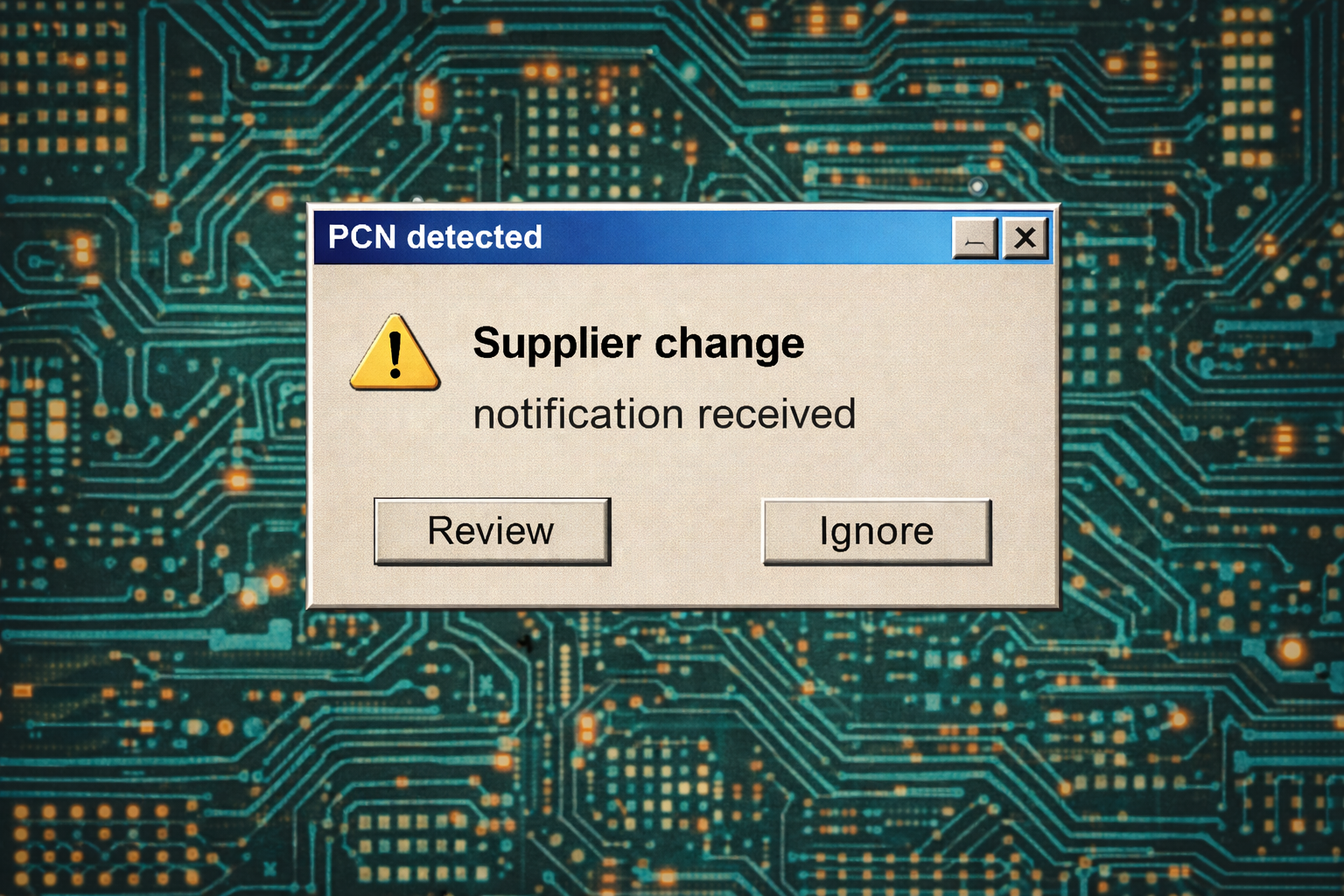
PCNs are normal. Surprises are optional.
A Product Change Notification, PCN, is a supplier saying something changed about a part or how it is made. The part number often stays the same. Your risk does not.
The bigger problem is the silent change. Same label, different plating, resin, tooling, or process. You only notice later when yield drifts or returns start clustering.
What actually changes in a PCN
The PCNs that hurt are usually not about headline electrical specs. They are about materials and process details that do not show up clearly in a datasheet.
Think mold compound and leadframe plating for ICs, contact plating thickness for connectors, resin grade for plastics, adhesives, coatings, or a site transfer. Even packaging changes can matter if your moisture handling rules shift.
If you want a plain language example of how a major supplier frames PCNs, TI publishes its policy and what it expects customers to do. Texas Instruments product change notification policy.
The shortest PCN routine that works
A PCN process fails when it lives in personal inboxes. It works when it becomes a boring loop.
Route every PCN into one place. A shared mailbox is enough. A system is better.
Triage fast with one question. Could this affect form, fit, function, reliability, compliance, or interchangeability. If yes, treat it as high risk until you have evidence.
Decide what proof you need. Low risk changes might only need the supplier notice. Higher risk changes need samples, reliability data, or a small delta qualification. The goal is to stop guessing.
Set a cut in boundary. If you accept a PCN but do not define when it starts, the factory will mix old and new lots. Not because they are sloppy. Because inventory exists on both sides of the change.
Silent changes are a traceability problem
Silent changes stop being scary when you can draw a clean line from a field issue back to a supplier lot.
Keep date code and lot code traceability for the parts that can create painful failures. Power parts, connectors, batteries, adhesives, and anything tied to compliance margins. Without traceability, every investigation turns into opinions.
If you want a standards anchor for what supplier notifications should contain, JEDEC J STD 046 is the common industry reference for customer notification of product and process changes. JEDEC J STD 046 overview.
Where Titoma fits, without creating extra workload
If your team keeps mixing up ECO, ECN, and PCN, you will handle changes slowly and inconsistently. ECO is your change. PCN is the supplier’s change. This internal reference keeps the language consistent across engineering, sourcing, and manufacturing. Electronics manufacturing terms you need to know.
PCNs become emergencies when designs have no tolerance for substitution. A design built with manufacturing realities in mind gives you options when suppliers change parts or processes. DFM vs DFA vs DFX what should you actually use.
Bottom line
PCNs are part of electronics manufacturing. Silent changes are too, unless you build controls that make them visible.
Centralize notifications, triage risk fast, demand evidence when it matters, and enforce cut in boundaries tied to traceability. Do that and supplier changes stop turning into field failures nobody can explain.