
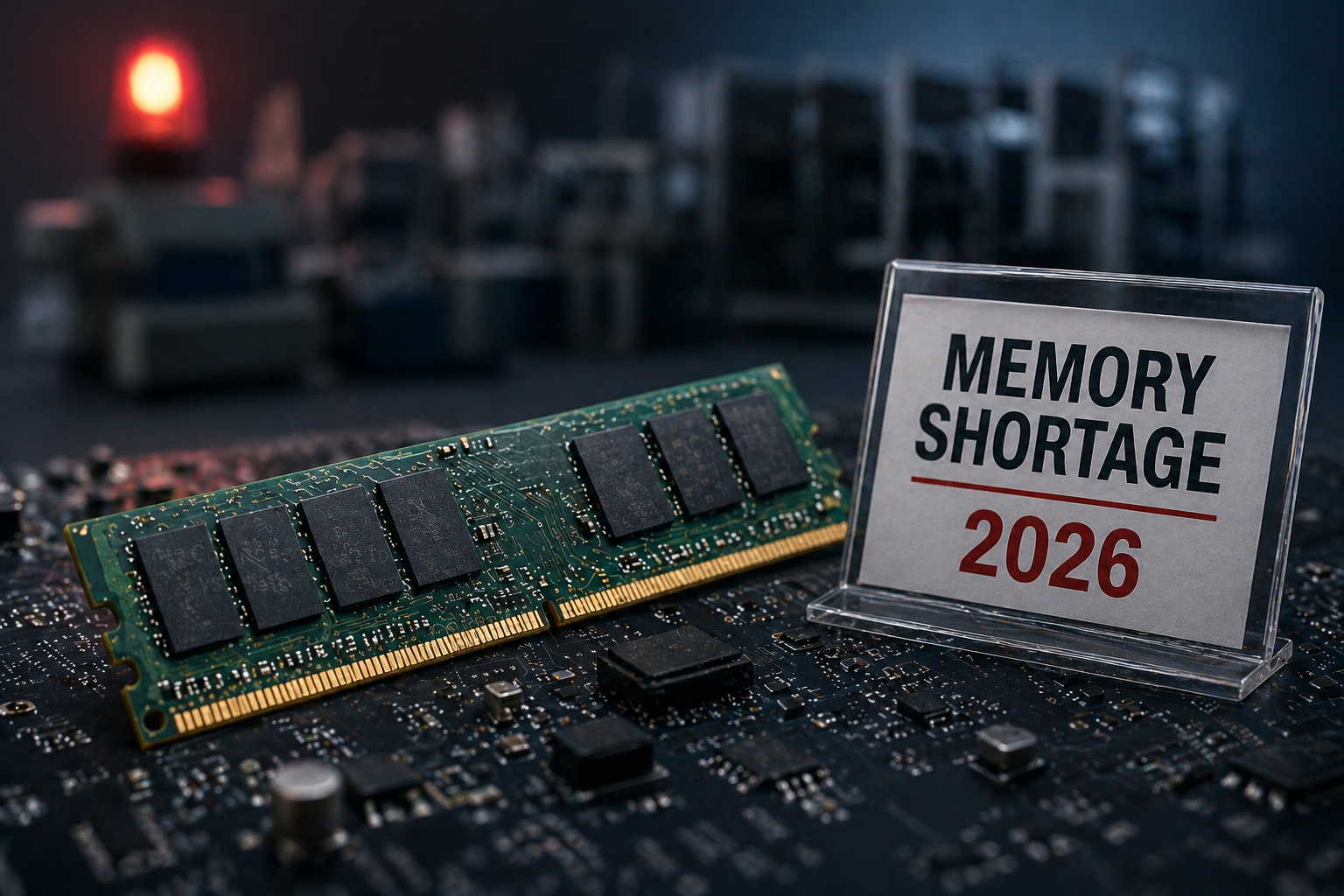
Memory is expensive again. Not a little expensive. Painfully expensive.
TrendForce revised its Q1 2026 forecast for conventional DRAM contract prices to a 90–95% quarter-over-quarter increase, with NAND Flash up 55–60%. AI server demand is pulling capacity toward high-end memory, while ordinary electronics products fight over what is left.
That matters for hardware teams because memory is rarely just a line item on the BOM. It affects PCB layout, firmware assumptions, supplier choices, testing, production timing, and sometimes the whole product architecture.
This is where many products get into trouble. The prototype works. The first build looks fine. Then the buyer discovers the selected memory part has moved out, gone up, or become “available soon,” which often means “please stop asking.”
This Is a Design Problem, Not Just a Buying Problem
When memory prices jump, the first reaction is usually procurement panic. Ask more suppliers. Push the CM. Check broker stock. Refresh the spreadsheet until it gives better news.
Sometimes that works. Often it just confirms the same ugly fact: the design has too few options.
If the PCB only supports one memory package, one approved supplier, or one exact part number, the sourcing problem has already become an engineering problem. Changing it later can mean layout updates, firmware changes, new validation, more NRE charges, and delayed production.
That is why design for manufacturing should include BOM risk management. Not as a nice extra. As part of keeping the product buildable when the market stops behaving.
AI Demand Is Pulling Supply Away From Ordinary Products
The problem is not that memory companies forgot how to make DRAM. The problem is that high-bandwidth memory and server-grade products are more attractive than commodity parts.
Suppliers naturally prioritize the wafers and customers that bring the best return. That leaves consumer, industrial, and B2B electronics teams dealing with higher prices, tighter allocation, and longer planning windows.
VersaLogic also notes that memory market conditions in 2026 are tight, with AI and server demand creating pressure across supply. That does not mean every part is impossible to buy. It means lazy component selection is more expensive than usual.
For teams building real products, this becomes a time-to-market issue. A delayed memory part can block PCB release, firmware validation, pilot builds, production test planning, and customer shipments.
Single-Source Memory Is a Quiet Design Risk
Single-sourcing is easy during development. One part. One footprint. One datasheet. Fewer decisions.
It is also how teams paint themselves into a corner.
A better approach is to check second-source options before the PCB layout is frozen. That may mean choosing a package with wider supplier support, allowing alternate memory densities, or designing the layout so two approved parts can be qualified with minimal changes.
This is not glamorous work. Nobody puts “alternate footprint planning” on a pitch deck. But it can save a product when allocation gets ugly.
The real question is not only whether the part works today. It is whether the product can still be built six months from now, at volume, without redesigning the board under pressure.
The Same Problem Shows Up in PCB Assembly
Memory shortages are one kind of production risk. Footprint mistakes are another.
Recent online discussions around low-cost PCBA services show a familiar failure mode: connectors, alignment pins, or mechanical features look acceptable in the design file, but the manufacturing package does not clearly communicate what the factory needs.
One common source of trouble is the gap between Gerber data and Excellon drill files. PCB drill files define hole size, position, and drilling data, while the fabrication package must also make plating intent clear. If plated and non-plated holes are not clearly separated, the board house may not understand which holes are electrical and which holes are only mechanical.
That can lead to connector fit problems, assembly delays, shorts, or boards being placed on hold. None of this feels clever when the SMT line is waiting.
The Gerber-Excellon Gap Is Small Until It Is Expensive
Gerbers describe copper, solder mask, silkscreen, and board layers. Excellon files describe drilling. Both matter.
A connector may need plated holes for electrical pins and non-plated holes for plastic alignment posts. If the non-plated holes are missing, merged, misclassified, or unclear, the board may pass a quick visual review but fail during assembly.
This is the kind of mistake that low-cost automated services may not catch. Their job is often to build what the files say, not to rescue what the files should have said.
That sounds harsh, but it is reality. A factory is not a mind reader. At production scale, assumptions become scrap.
AI-Generated Footprints Make This Worse
AI tools can help speed up design work, but they do not understand your factory by default.
A generated footprint may place pads in the right general area and still miss keep-out zones, alignment pins, courtyard clearance, soldering access, or realistic assembly tolerances. It may fit on the screen and fail on the line.
That is the boring truth of hardware: pixels are forgiving. Connectors are not.
This does not mean engineers should avoid AI tools. It means AI-generated footprints need review against the datasheet, the mechanical model, the assembly process, and the actual manufacturing files. Otherwise the tool only helps you make mistakes faster.
What DFM Should Check Before Production
Before moving into production, teams should review memory choices and PCB data together, not as separate tasks.
For memory and sourcing, check whether the selected part has realistic lead times, second-source options, package compatibility, lifecycle support, and a clear approval path for alternates.
For PCB manufacturing, check whether drill files clearly separate plated and non-plated holes, whether connector footprints match the actual datasheet, and whether mechanical alignment features are visible in the manufacturing package.
For SMT assembly, check whether the CM can inspect part orientation, confirm placement data, and flag mismatches before the first run starts. These checks belong in the same production review as SMT assembly planning, not after the first batch fails.
For production test, check whether alternate memory parts require firmware changes, test limit changes, programming changes, or extra validation. A second source is not useful if nobody has tested it.
Landed Cost Is More Than the BOM Price
A cheaper memory part does not always lower the real product cost.
If it creates layout risk, second-source problems, firmware changes, lower yield, longer test time, or more field failures, the landed cost may be worse than the part price suggests.
The same applies to cheap assembly. A low PCBA quote looks attractive until the factory misses a connector issue, the build goes on hold, and engineers spend a week arguing over whether the design file or the assembly house is to blame.
Blame is not a production plan.
Where Titoma Fits
This is where hands-on DFM matters.
Automated checks can catch some obvious errors. They will not always catch a sourcing trap, a connector mismatch, or a footprint that technically passes but still causes trouble in production.
Titoma’s Design for China Manufacturing approach focuses on designing for real manufacturing in Taiwan and China. That means checking the BOM, PCB layout, supplier options, assembly process, and test plan before the design is treated as finished.
For memory-heavy products, this can include dual-source planning, footprint strategy, and early review of parts that may become allocation risks.
For PCB assemblies, it means checking the dull details that often cause expensive failures: drill files, connector alignment, placement data, test access, and factory feedback.
Final Takeaway
The 2026 memory crunch is not only about paying more for DDR5 or NAND.
It is a reminder that sourcing decisions become design constraints. PCB details become production delays. Cheap assembly becomes expensive when nobody catches the mismatch before the line starts.
Good DFM will not make memory cheap again. Sadly, engineers are not wizards.
But it can give your product more options when the supply chain gets tight. In 2026, that may matter more than shaving a few cents from a prototype BOM.