

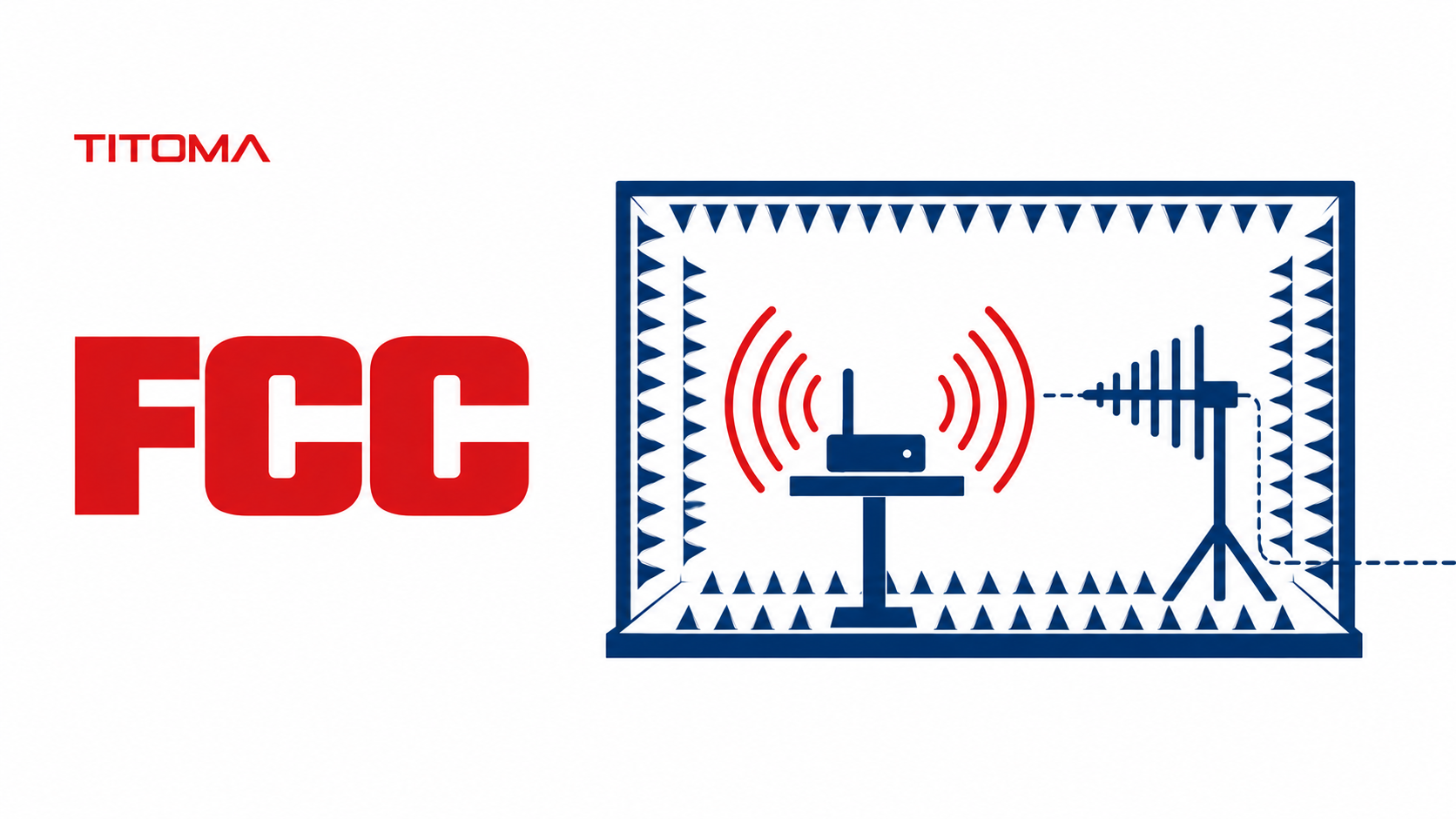
FCC certification is the equipment authorization process used to show that an electronic device meets applicable US rules for radio-frequency emissions and operation. It applies to many products marketed or imported into the United States, especially devices with wireless transmitters. The required path affects RF design, testing, documentation, and production timing.
What Does FCC Certification Actually Mean?
“FCC certification” is the phrase buyers use for proving that an electronic product can legally enter the US market under Federal Communications Commission rules. In the strict regulatory sense, Certification is one equipment-authorization route. Other products use Supplier’s Declaration of Conformity, or SDoC, instead.
The FCC equipment authorization procedures set the routes, equipment categories, and responsible-party duties. They apply to products sold or imported into the US, regardless of where they were designed or assembled.
What Does the FCC Regulate?
The FCC regulates radio-frequency devices under Title 47 of the US rules. For product teams, the practical question is whether the device intentionally transmits radio energy or creates RF energy as a by-product of its electronics.
| Device type | Typical example | Why it matters |
|---|---|---|
| Intentional radiator | Wi-Fi, Bluetooth, cellular, LoRa, RFID, remote-control transmitter | It deliberately transmits RF energy and commonly follows the Certification route. |
| Unintentional radiator | Digital controller, industrial display, wired power supply, PC peripheral | Its clocks and switching circuits create RF energy incidentally. Many products follow SDoC requirements. |
| Incidental radiator | Passive mechanical equipment with no deliberate electronics function | It can still create interference, but it is treated differently under the rules. |
Part 15 is the rule set most hardware teams encounter. It limits unwanted emissions and, for wireless products, governs deliberate transmitters. A product can contain both types: a Bluetooth radio needs transmitter compliance, while the finished host still needs attention to its own digital noise, power system, ports, and enclosure.
FCC authorization is often discussed alongside CE marking and UL, but each covers a different market and risk. A CE mark does not replace the US FCC route; an electrical-safety evaluation does not prove RF emissions compliance.
Certification, SDoC, or DoC: Which Procedure Applies to Your Product?
Start with the radio function, then confirm the relevant FCC rule part and product classification with a qualified lab or Telecommunications Certification Body. The route below is a buying and design guide, not a substitute for that classification.
| Route | Common product scope | What the team needs | Typical outcome |
|---|---|---|---|
| Certification | Most intentional radiators, including Wi-Fi, Bluetooth, cellular, and many RF transmitters | Test reports, technical file, TCB review, labeling plan, and an FCC grantee account | FCC grant and FCC ID |
| SDoC | Many unintentional radiators, such as digital devices without a transmitter | Appropriate test evidence, compliance records, labeling and a responsible party in the US | Supplier’s Declaration of Conformity; no FCC ID |
| DoC | Older specifications, labels, and test reports | Check the current rule path instead of treating it as a new option | Legacy term largely replaced by SDoC |
DoC, or Declaration of Conformity, still appears in older supplier documents. Current FCC rules generally use SDoC, so it is not a separate third route to choose for a new build. That small terminology trap can cause an RF test house, a contract manufacturer, and a purchasing team to think they agreed on the same deliverable when they have not.
Does Your Product Need FCC Certification?
Not every electronic product needs Certification, but many need an FCC compliance path before US sale. Work through these questions while the product is still a design, not a container booking:
- Does it intentionally transmit through Wi-Fi, Bluetooth, cellular, GNSS, RFID, or another radio?
- Does it include a pre-certified radio module, and does the host design stay within that module’s approved conditions?
- Does the product contain clocks, processors, switching supplies, displays, Ethernet, USB, or cables that can create emissions?
- Who is the US responsible party, importer, or grantee, and who will keep the evidence after production?
A certified module can reduce work, but it does not make every host product automatically compliant. Antenna type, antenna position, ground clearance, enclosure material, power supply noise, simultaneous-transmission conditions, and label language may fall outside the module grant. The finished product may need additional testing or a new authorization route.
What Does FCC Compliance Require From Your Design?
FCC work begins with product architecture. Once a PCB, enclosure, cable set, and antenna are fixed, the cost of fixing a failed emission result is usually paid in tooling changes, replacement parts, retesting, and delayed shipments.
RF and EMC-sensitive design choices include the antenna keep-out zone, ground return path, PCB layer stack-up, switching-regulator layout, clock routing, cable shielding, connector grounding, enclosure seams, and openings near radios. A metal enclosure may contain some emissions but detune an antenna. A plastic enclosure can be RF-friendly while exposing poor shielding choices. There is rarely a one-line rule that survives contact with a real product.
Build pre-compliance checks into the engineering-validation plan. Use production-representative boards, enclosures, cables, firmware, and power adapters where possible. A bare prototype that passes on a lab bench can become a different RF system once placed in its final housing with its final cable harness.
Good design for manufacturing also helps here. Test points, controlled assembly variation, clear torque and shielding instructions, and stable component substitutions make it easier to reproduce the unit that was tested. If a substitute inductor, connector, tray material, firmware image, or antenna vendor can change compliance behavior, put that change under formal change control.
How to Know If Your Manufacturing Partner Handles FCC Properly
Ask for more than a promise that the factory “does FCC.” A useful partner can show how the compliance path reaches purchasing, engineering, production, and final documentation.
- Ask which FCC route they believe applies, and why.
- Ask whether they have built products with comparable radio, enclosure, antenna, and cable arrangements.
- Ask how they prevent unapproved component, antenna, firmware, and PCB changes after testing.
- Ask who coordinates pre-compliance testing, final lab samples, label artwork, manuals, and the technical file.
- Ask what factory records will match the tested configuration and how long they can be retrieved.
At Titoma, FCC requirements are reviewed with the electronics design and manufacturing teams before production tooling is committed. The RF architecture, module choice, PCB stack-up, enclosure, grounding, test plan, and documentation are treated as connected production decisions. That approach gives a team a chance to correct a practical problem while a board spin is still normal engineering work, rather than after a test report has stopped a shipment.
For current interpretation and product-specific test expectations, use the FCC’s Office of Engineering and Technology Knowledge Database and confirm the plan with an accredited lab or TCB. The documents matter, but the physical unit remains the thing being tested.
