
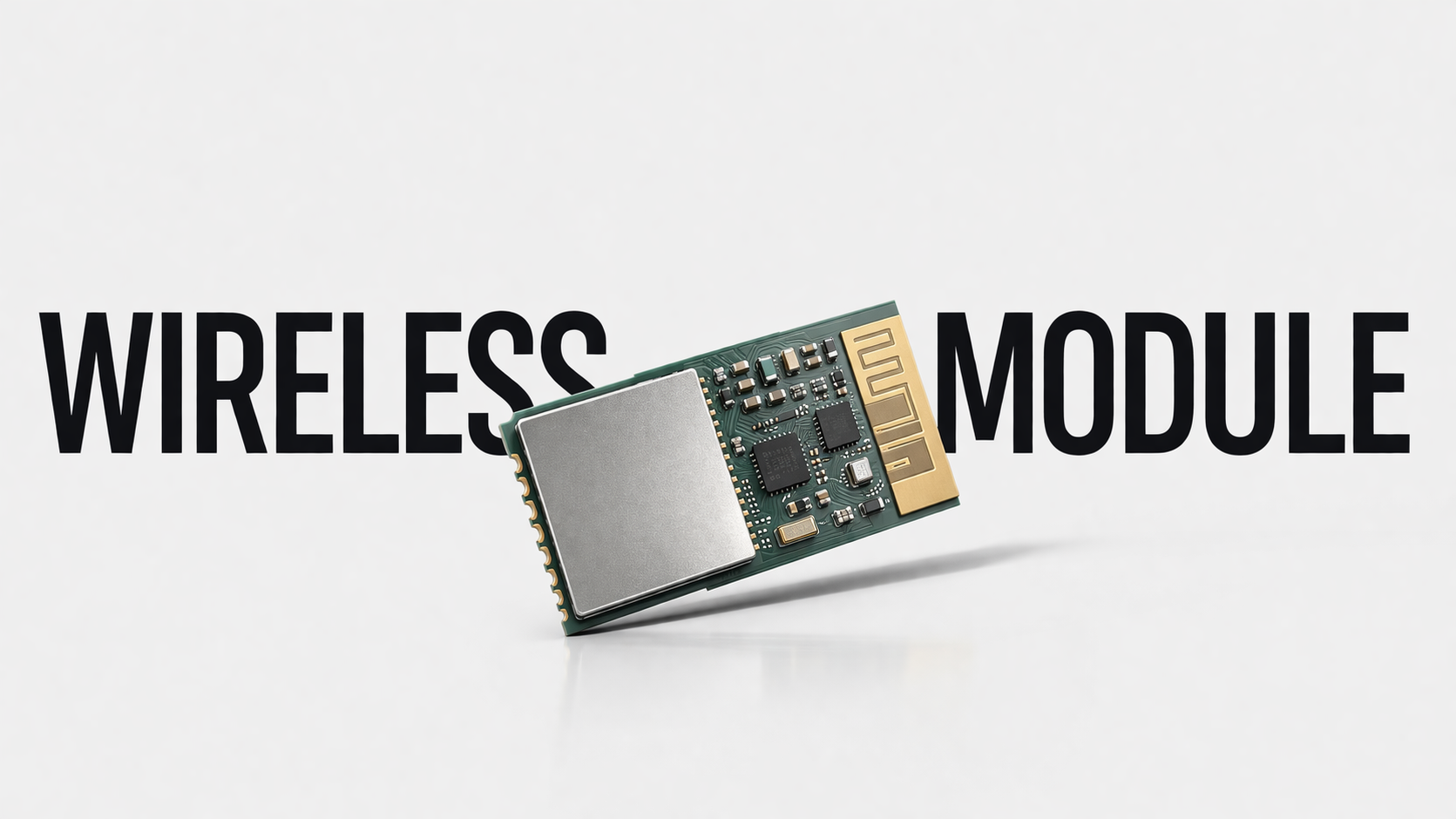
Picking a wireless module looks easy at prototype stage. Then mass production starts, and the real problems show up.
A module decision affects far more than connectivity. It touches certification, antenna performance, enclosure design, power budget, sourcing risk, firmware effort, and long term product support. A module that works fine on a bench can still become a headache once you need stable yield, regional approvals, and a second source.
A wireless module decision also affects the rest of the system architecture. If the product depends on tight power budgets, sensor timing, or constrained firmware resources, it helps to review the broader embedded systems building blocks for DFM before locking in a radio choice. That part gets missed surprisingly often, especially when teams treat connectivity as a bolt on instead of part of the full product design.
That is why the right question is not “Which module has the best specs?” The better question is “Which module gives this product the best chance of shipping on time, passing compliance, and staying buildable for the next few years?”
Start with the product, not the radio
Before comparing modules, define what the product actually needs.
Ask these questions first:
- Does the product need short range or wide area coverage?
- Will it run on battery, mains power, or both?
- Does it send small bursts of data or continuous traffic?
- Does it need a phone app, a gateway, or direct cloud access?
- In which countries will it be sold?
- Does it need roaming, low latency, or high throughput?
- How long must the product stay in production?
These questions narrow the field quickly.
If the device needs phone connectivity, Bluetooth Low Energy is often the first place to look. If it needs higher throughput or direct internet access, Wi Fi may fit better. If it needs long range and low data volume, LoRaWAN or cellular LPWA may make more sense. LTE M and NB IoT were standardized for IoT use cases that need low device complexity and extended coverage.
Do not confuse “it works” with “it is manufacturable”
A wireless prototype can work in the lab and still fail as a production design.
This usually happens for three reasons. First, teams choose a module based on headline features and ignore certification path. Second, they underestimate antenna and enclosure effects. Third, they commit to a part without checking lifecycle, lead time, and alternates.
That is where early module decisions become expensive. Reworking RF late in the project is not elegant. It is just slow and annoying.
Module versus custom RF design
For most startups and many commercial devices, a certified module is the safer path.
Using a pre certified radio module can reduce RF design risk and simplify the approval process, but it does not eliminate all compliance work. The final host product still has to meet other applicable requirements.
A custom RF design can reduce unit cost at scale and give more control over footprint, power, and antenna tuning. But it usually increases development time, RF validation effort, and certification complexity. That trade can make sense for high volume products. For lower or medium volumes, it often does not.
A simple rule works well here. Use a module when time to market, certification risk, and engineering bandwidth matter more than squeezing every last cent out of the BOM. Move to custom RF only when the business case is strong enough to justify the extra pain.
Wi Fi, Bluetooth, cellular, and LoRaWAN each solve different problems
There is no universal best module. There is only a best fit for the product.
Wi Fi
Wi Fi is useful when you need higher data throughput, direct IP connectivity, or integration with existing local networks. It is common in mains powered products and in devices where users expect simple home or office connectivity.
The downside is power consumption, RF sensitivity to enclosure and antenna decisions, and a more demanding user experience if onboarding is poorly handled.
Good fit
smart appliances, gateways, displays, video adjacent products, high data IoT
Poor fit
tiny battery powered devices that wake rarely and send very little data
Bluetooth Low Energy
Bluetooth Low Energy is usually the practical choice for wearables, accessories, and products that talk to a smartphone. Its main advantages are ecosystem support, low power operation, and easy interaction with mobile apps.
Good fit
wearables, sensors, beacons, medical accessories, setup and provisioning links
Poor fit
products that need long range cloud connectivity without a phone or gateway
LTE M and NB IoT
Cellular LPWA options matter when the device must connect directly to the cloud without relying on local infrastructure. The GSMA overview of LTE M is useful here because it explains where LTE M and NB IoT fit best, especially for devices that need extended coverage, lower power use, and simpler deployment across wide areas.
Good fit
asset tracking, remote metering, field devices, distributed infrastructure
Poor fit
products sold into markets where carrier support is patchy or certification cost must stay very low
LoRaWAN
LoRaWAN is built for low power devices and long range communication with small data payloads. It works well where battery life and infrastructure control matter more than throughput.
Good fit
smart buildings, utilities, industrial sensing, campus networks, private deployments
Poor fit
products that need high data rates, low latency user interactions, or universal public network availability in every target market
Certification is where many projects get humbled
Wireless teams often assume a certified module means certification is done. It is not.
You still need to think about host product testing, regional approvals, antenna restrictions, labeling, integration conditions from the module vendor, and EMC performance of the final product.
Certification is another area where assumptions get expensive. The FCC guidance on modular approval makes the point clearly. A pre certified module can reduce some of the RF burden, but it does not mean the final host product is automatically cleared. That distinction matters a lot once the design moves from bench success to real production.
For Bluetooth, qualification is separate from regulatory approval. For Wi Fi, Alliance certification is separate again. These are different layers, and mixing them up wastes time.
This is where teams get trapped by cheap modules with vague documentation. A low unit price means little if the vendor cannot provide solid certification history, integration guidance, and long term support.
The antenna can ruin a perfectly good module choice
A wireless module is only half the story. The antenna, PCB layout, ground strategy, plastics, metal parts, and nearby batteries all affect real world performance.
This is why module selection should never happen in isolation from mechanical and PCB design.
Common mistakes include:
- putting the antenna next to metal or batteries
- changing the enclosure late without retuning expectations
- ignoring keep out guidance from the module vendor
- assuming bench performance will match final product performance
- using a certified module with a different antenna setup than approved
If the module supplier gives weak layout guidance, treat that as a warning sign.
Supply chain matters more than people admit
A wireless module is not just a technical choice. It is a sourcing decision.
Before locking one in, check:
- lifecycle status
- lead time trend
- chipset dependency
- vendor support quality
- regional availability
- roadmap stability
- possible alternates
- certification documents and revision control
Supply risk should be checked just as early as RF performance. Titoma has already written about this in its article on the 6 essential sensors every engineer must know, and the same logic applies here. A module may look perfect in a prototype, then become the wrong choice once lead times stretch, lifecycle status changes, or regional availability starts to matter.
A module with a famous brand behind it may still be a bad fit if it has long lead times, no second source path, or poor documentation discipline.
For mass production, boring is often good. Stable supply, clear docs, and predictable integration beat fancy feature lists.
A practical selection framework
If you are choosing between module options, score each one against these criteria:
| Criteria | What to check |
|---|---|
| Connectivity fit | Range, throughput, topology, phone or cloud path |
| Power profile | Sleep current, peak current, wake pattern |
| Certification path | Module approvals, host obligations, target regions |
| Antenna integration | Layout guidance, enclosure sensitivity, approved antenna options |
| Firmware effort | SDK quality, update path, ecosystem maturity |
| Supply risk | Lead time, lifecycle, alternates, vendor stability |
| Cost in production | Module cost plus test, support, and failure risk |
| Product roadmap fit | Can the same platform support future variants? |
This table matters more than marketing claims.
What most teams should do
For many new products, the safest path is this. Use a proven certified module from a vendor with decent documentation, pick the wireless standard that matches actual product behavior rather than imagined future features, and validate antenna performance early with the real enclosure.
That sounds obvious. It still gets ignored all the time.
Final thought
The best wireless module is not the one with the longest feature list. It is the one that lets your product ship with the least avoidable risk.
That usually means thinking beyond RF specs and looking at certification, integration, sourcing, and support from day one.
If your team chooses the module only by price or data sheet features, you are not really making a manufacturing decision yet. You are still shopping.